
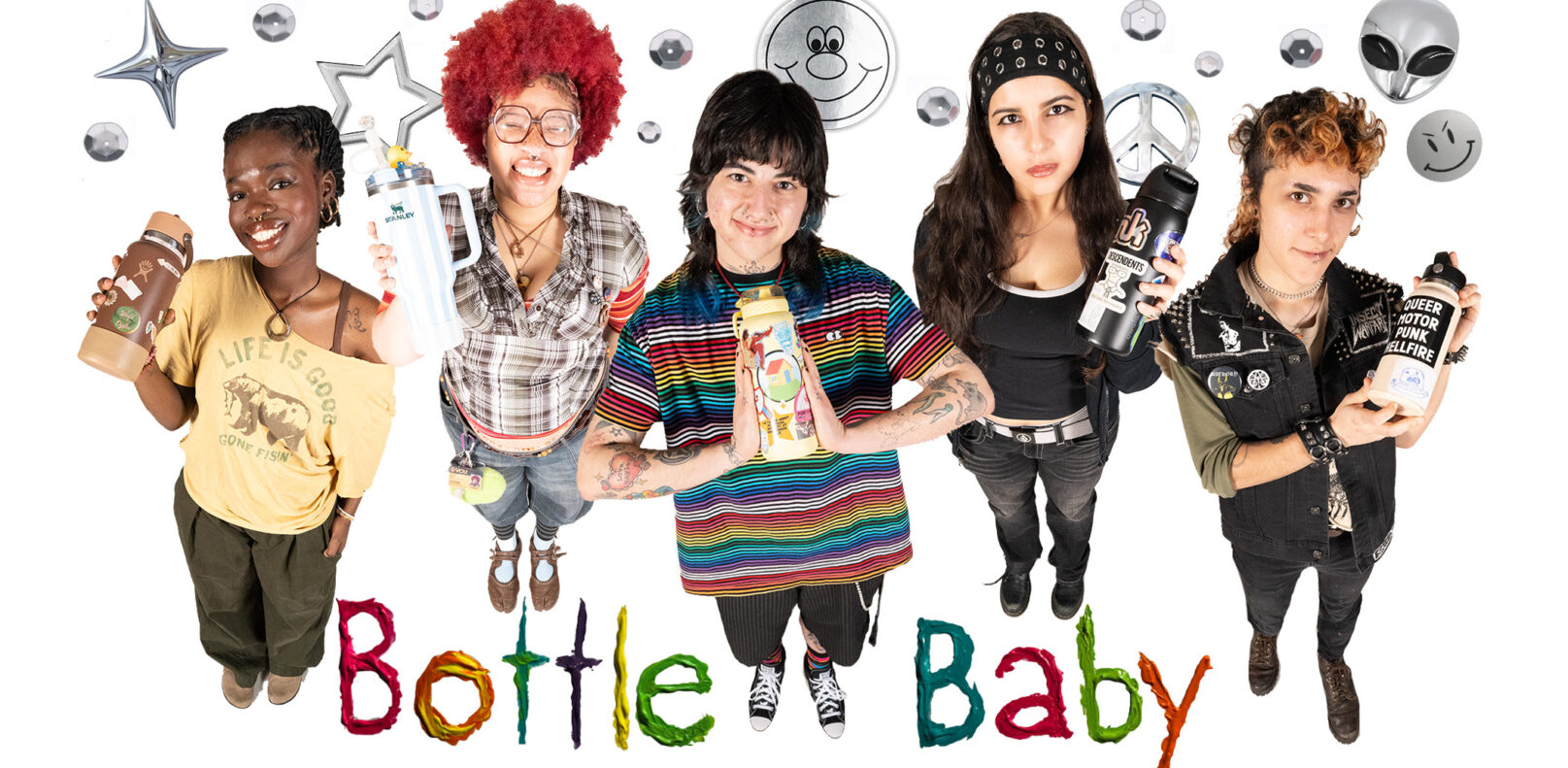
Animal skins, bladders, gourds, and bamboo: all used as functional and portable receptacles for water. These early water bottles took an aesthetic shift in East Asia, Egypt, and Mesopotamia with the birth of clay vessels. Clay vessels increasingly became more decorative and sculptural — now fast forward to 2026. We have skirts and keychains for our cups to attach smaller cups to our larger ones. Every bottle is customized from straw, to lid, to handle; by color, design, and material. Are these customizations more about our personal preference, communication to the outside world, or both?
There is a fad of water bottles that seems to cycle through every one to two years. Hydroflasks, Yetis, Stanleys, Owalas; these bottles become more than a mere receptacle for water. When and why did people begin collecting every color, lining up for hours before stores even opened, and somehow turning an item created to reduce waste into a cycle of overconsumption and mass disposal? This concept is not at all new, as people have always collected figurines, shoes, clothes, stuffed animals, and hats. So what makes water bottles any different? Water bottles are blank canvases for stickers and keychains, and like humans do with everything — our cars, our nails, and our homes —we customize them. Bottles are sometimes printed with designs, but more often than not, manufacturers have caught onto the trend of stickers and have intentionally opted for a blank look. Water bottles have, of course, become a means of self expression, but also a symbol for social relevancy. I remember growing up and seeing that a new water bottle would trend every few years, then seeing a plethora of the past trending water bottles pile up in thrift stores when another one began trending. It was a living contradiction playing out, an item created to reduce single use plastics, almost always with websites accompanied with words like “sustainable” and “eco-friendly.” Water bottles became a resource-intensive, unsustainable, and expensive trend. When I see people who customize their belongings, I have more hope for the object’s longevity and sustainability. It’s no secret that decorating and customizing things helps you enjoy and keep them for longer. Customization of an object creates an extended sense of self, a rejection of modern throwaway culture, and the building of sentiment and symbolic meaning around an object. Giving our possessions sentiment and appreciation can help us use them to the end of their lifespans and even keep them or pass them down at the end of their usage.
When sitting in class one day, I realized someone across the room sporting the same shade of olive green on a bottle, a backpack, and a sweatshirt. I panned my head around the room realizing that many people had, in one way or another, dressed and accessorized similarly to their water bottles. The idea of looking like your possessions may be obvious, but that didn’t make it any less humorous to me as I realized I looked like mine too. Thinking of a water bottle as a descendant of yourself, I set out to photograph people who looked like their water bottle to not only appreciate the sustainable aspects of personalization, but to also appreciate the art of looking like our belongings.
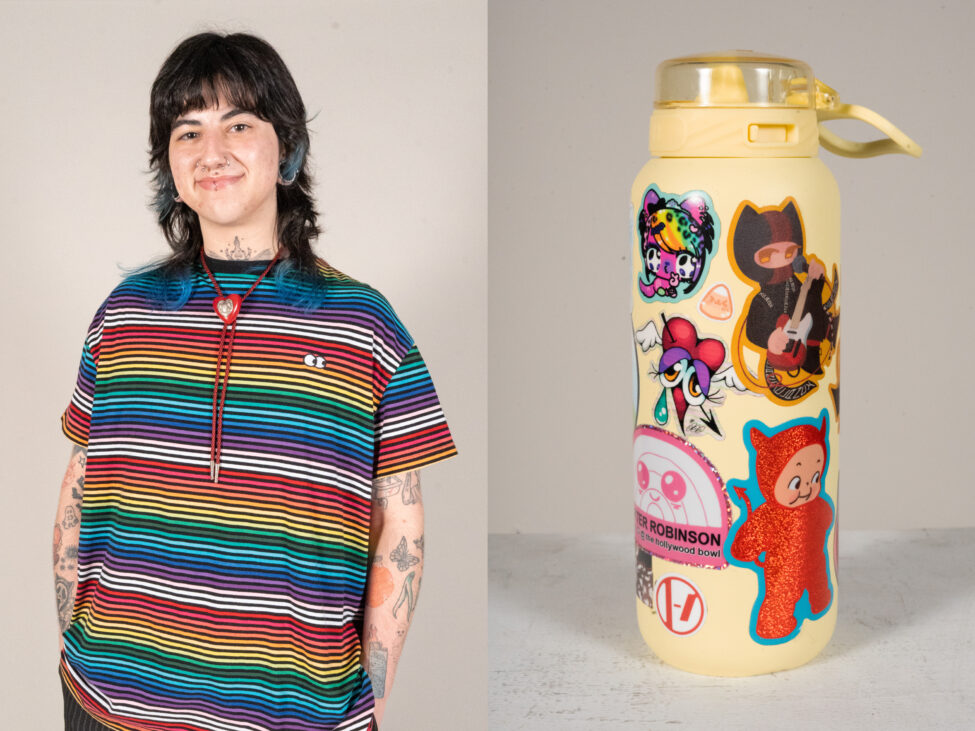
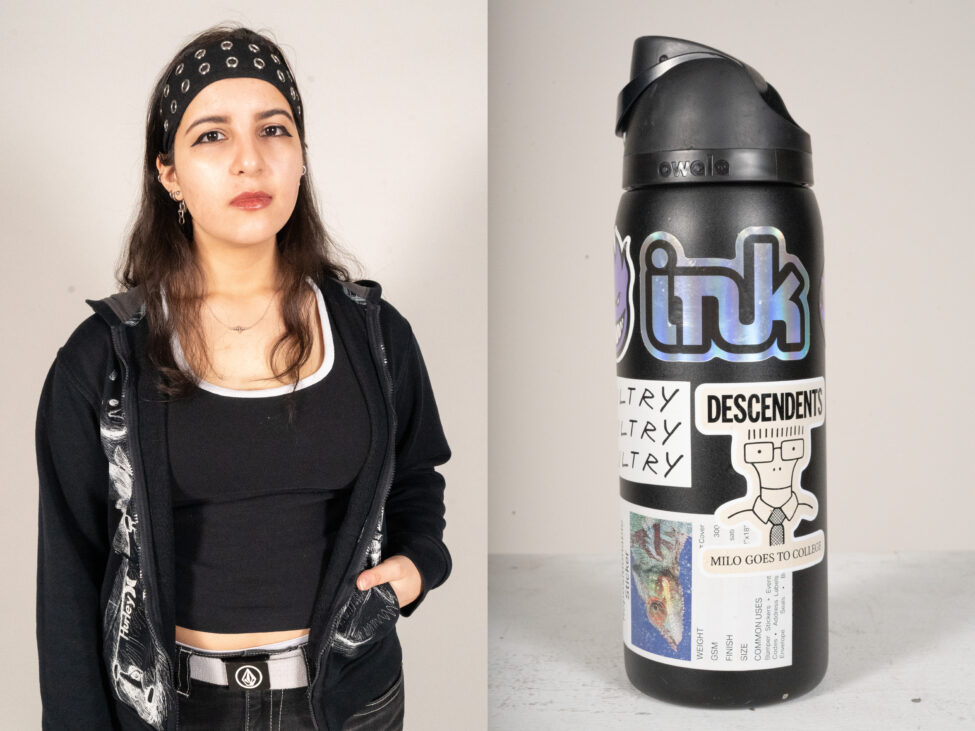
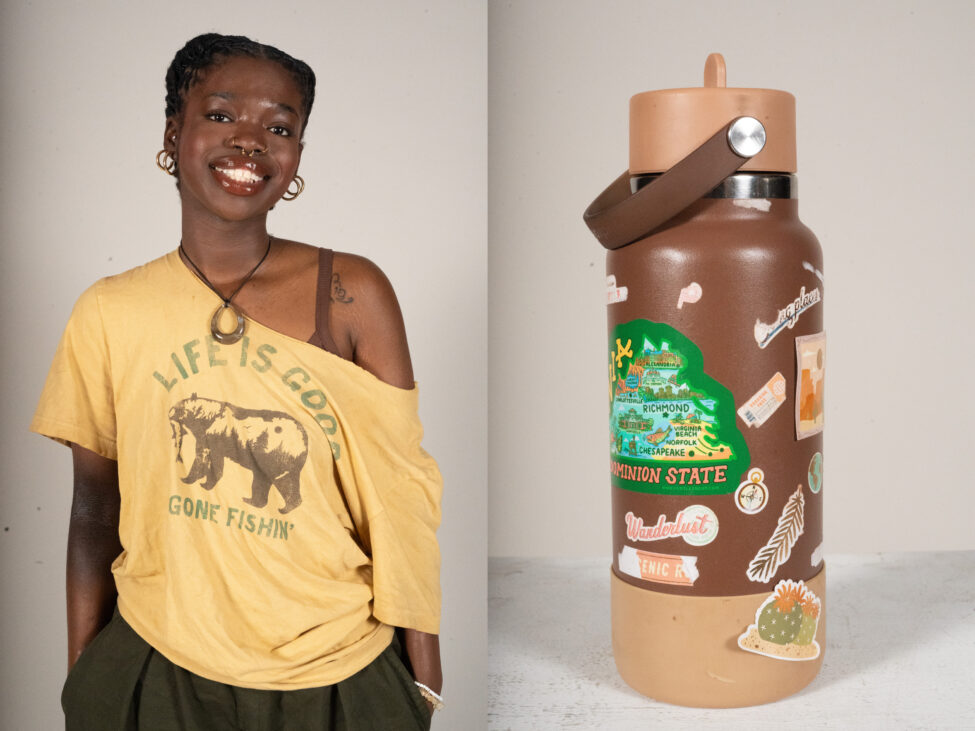
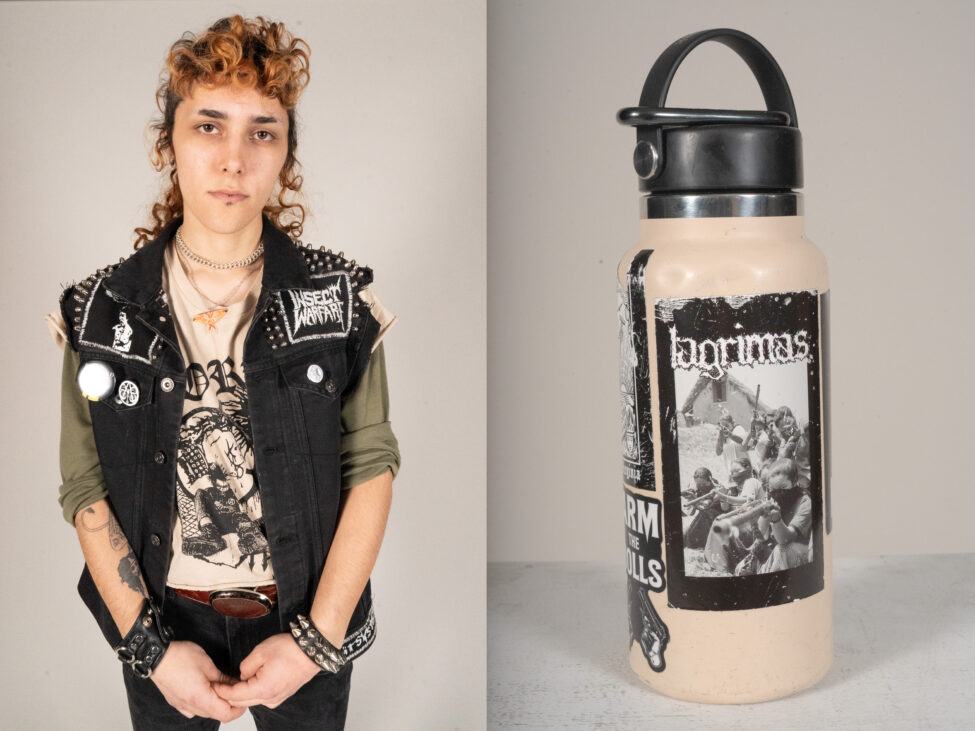
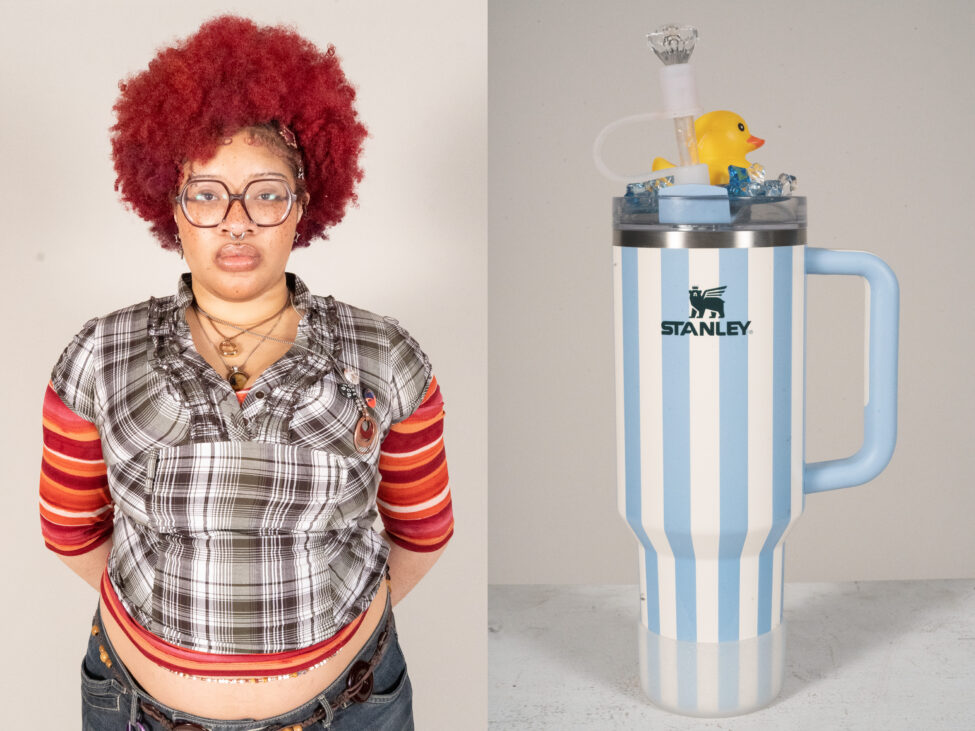
Photography: Jadyn Lalonde
Graphics: Aya Zejjari