
After we’ve picked up the pieces of whatever America will be after all this is over — and be very, very aware that it will be over one day — we will need to reckon with how this happened. To give you a list of systemic issues would be nice and clean and helpful for my editors, yes, but redundant.
We know that consolidation of governmental power into the executive branch spells doom, or that the inability to properly corral a “peacekeeping” force you’ve spent decades lionizing into a rabid paranoia leads to rogue actors becoming stars. There shouldn’t need to be a series of Congressional hearings where stenographers, fingers bleeding, transcribe the words of political wunderkinds who swear that this time, for real, they’ll govern with the sense of justice and parity they are asked — but not required — to have. We needn’t decorative plaques outside of Minnesotan craftsman homes that mark every Crispus Attucks who is yet to give their lives, or slashed prices on the anniversary date of the president’s passing so we never forget, or the history books that will inevitably erase all prior complaints the American people had in lieu of a pithy “ICE was bad, so we got rid of them.”
We can’t pretend we woke up in a bed we didn’t make. We revel in violence daily but refuse to consider what that word “violence” really is. Our state enables violence,not just through its avatars in the police and the military. It’s through subsidies for animal killing fields that destroy forests and the enabling insurance and payday loan and pharmaceutical companies to plunder the pockets of the poor. It’s in the form of lost limbs in foreign factories and birth defects from our trash. It’s the memories of the blood of schoolgirls staining the sand we wish to drill and the skies blacked out from our smog. The nation views violence in concrete simplicity — a fist in the jaw on an Instagram reel, a knee on a neck on a street corner — but it’s far from just that.
What we must say, repeat, sermonize, until it is the first words of children and the last words of elders, until it flows from our mouths like carbon monoxide, until we’ve skipped the initial shame of the statement and the resulting embarrassment, and even the latter joy and freedom of being able to say it in the past tense and mean it:
“We are a nation of death.”
I remember my first time hunting semi-clearly. It comes to me as the cold dew on a morning in January, in the years where I was young enough to not notice my grandfather’s growing shuffle on his bad knee that veteran’s affairs never caught. I would have been dwarfed by his Mossberg if he’d let me hold it, but he knew better than that. The underbrush had swallowed me up. We trudged past crumbling homes and through the tree line to a blind I’d seen him claim with poker chips at the lodge an hour ago.
Eight-years-old, I didn’t understand the situation we were in. I knew to be quiet, but with no punishment on the horizon I’d squeak out questions at the same clip I’d always had. He’d respond sometimes, other times snap at me, other times stare out like the silent treatment worked on a child.
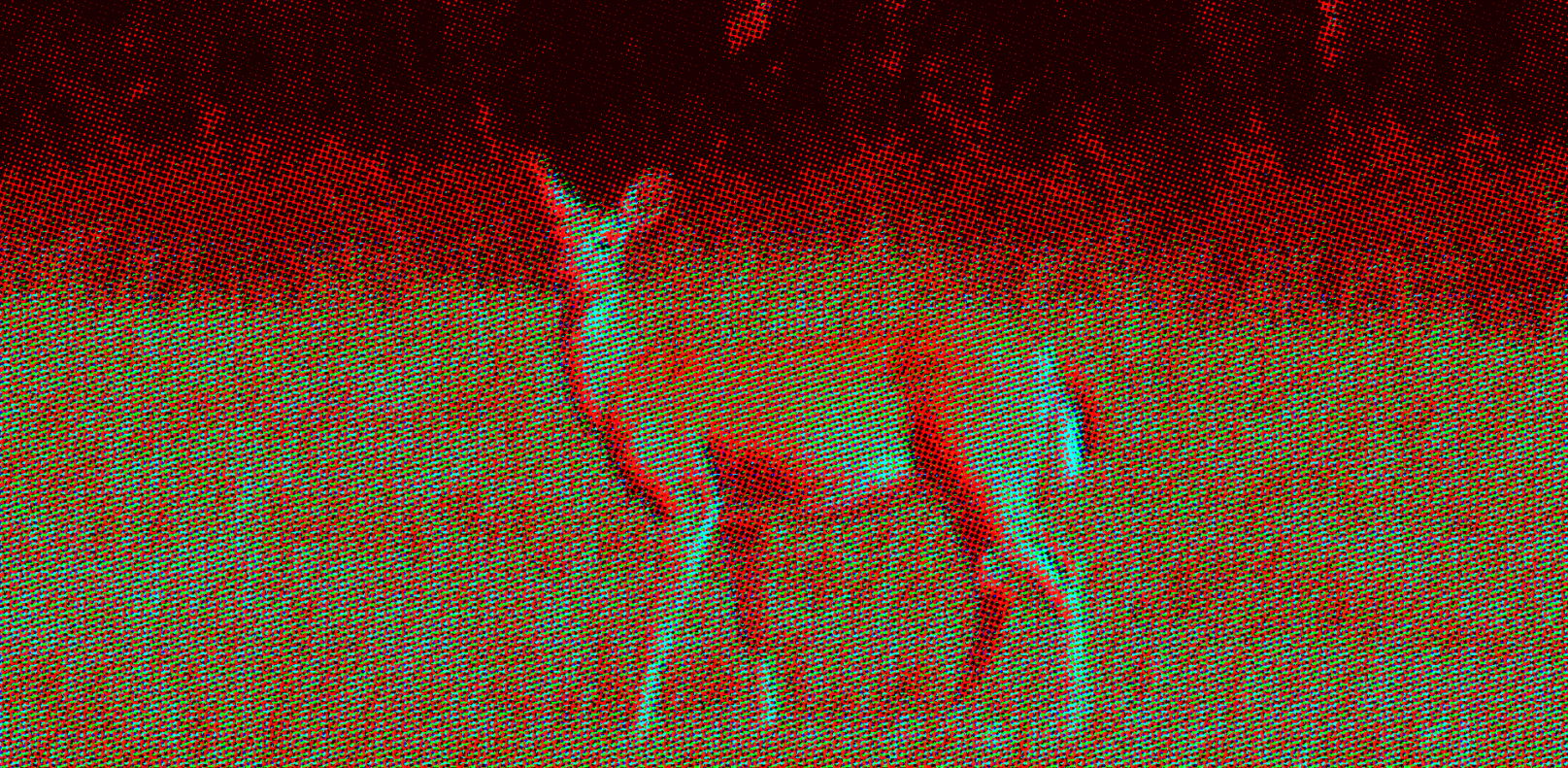
In the tree line ahead, peeking from the oak trunks, a puff of breath. Grandpa had spotted it first and glanced at me, somewhere in between “check this out” and “don’t mess this up.” My legs crept from my stool to the tent flap. A velvet dot entered, leading the slender head of a doe. Another puff of breath.
My grandfather had pulled his glove off at this point and tossed it gently to the ground. It barely made a noise when it landed, about half the volume of the subsequent click of a safety being disengaged.
The doe had turned to look past us now. Maybe not at us directly but maybe through or above us. In that moment, her chest followed her head and lined itself for a heart-shot, not dead on but as good as it. Maybe she’d sensed her future. Maybe she knew that what was next was not a quick meal, rest with her fawns, the night sky in her eyes. Maybe in that breath, while my grandfather’s eyes trained at the spot in her chest where buckshot would soon part pelt, split muscle, shred her heart, blend her lungs, she saw an American.
I wonder if the sterility of my hometown Fresh Pride which hummed with waffling conversations by the deli counter and the buzz of commercial cooling was supposed to resemble the morgue. Five individually wrapped breasts from two-and-a-half birds plucked and butchered fifty days after their eggshells first cracked was $3.01 a pound. It came wrapped in plastic, paper towel underneath it to soak up the blood. Somewhere in the back a machine whirls and a man presses down on the funnel he’s poured beef chuck into. Out the other end through extruder holes comes pink-tinged gristle and fat and then the mince-meat flows. He’ll do this all day, pounds and pounds and pounds of it.
Ironically, it consumes me way more than I consume it. It nags me even now. The coldness of it, the congenialities of Southern drawl drowning in my skull.
When you bring this up, by the way, they look at you deranged. Mention that, in essence, we treat a buck with such reverence that we mount them in dens, but send 140,000 beings to the beyond in the time it’s taken me to readjust this sentence’s word choice, and you’ll gain a reputation as one morbid little tyke.
Once that realization hits, you can mention it twice. Once, in the cereal aisle; your mom will snatch the Frosted Flakes from you with her left and reach for the industrial “Frosted Corn Cereal” with the right. You’ll spring the question on her, and you’ll mumble a little bit because it’s your first time asking a Big Boy question, and she’ll internally freak out at your impromptu show of existentialism while outwardly projecting a “bless your heart” air.
The second time you’re older. Older than you were then and much older than any of the children who looked like you when you asked the first time and whose souls were merely on loan from Heaven. You’ll be confronted again with that nag — not from the previous combination of pale flesh under cool phosphorescence, but from the woman a checkout register over. The bebop of the checkout aisle and all its rhythmic scans, beeps, sliding lane machinery, and conversational chitters will fade out as you glance at her. She doesn’t notice. The lines in her face stir and her brow furrows as she watches that screen count up and up and up. Her eyes dart in quiet calculation as she decides that, actually, she’s decided she doesn’t really need coffee this week, nor the spare loaf of bread and the accompanying Nutella, or the Italian sausage.
Then, the cashier will rip your card out of the beeping terminal. You’ll grab your bags and walk out, drive home, sit on your couch, and when your father arrives you’ll ask him the same thing. He’ll do what your mom did and tell you that this is how the world works. Sometimes animals must be slaughtered and left on a hot pallet to rot from a rounding error. Sometimes people mistake their math and they won’t get to eat. When he says this, you’ll never believe a word from their mouths again.
This is how American violence flows. It doesn’t come from the barrel of a gun or from the flow of capital (although both are origins and manifestations), it comes from ennui. It is a great deadening drone which flows from the heart of the nation. Every day holds an interaction like the ones described above and forms a white noise barrier. There is a fundamental separation in our modern society from other people, and that separation allows for a passive dehumanization that leads to violence’s slide from shocking to subliminal.
Shortly after October 7th a few years ago I was on a trip for WVCW Radio in Orlando. It was a conference in a tourist town: every location within walking distance was flat, bare concrete. It was the bare minimum of pedestrian considerations in a locale crowded with Ubers and Lyfts. The architecture was doing its job by funnelling everything into consumption centers. Hop on an electric scooter and jet from Applebee’s to Applebee’s. Drop $30 on a holographic photo in a plastic frame. Jiggle it around as it morphs between Photoshop compositions of Messi and Goku. Walk through a dead convention center. Marvel at its numerous signs advertising a meeting of local insurance companies, followed by a childhood beauty pageant the next month. It’s Orlando, baby.
Sitting poolside at night the veil which the entire experience had poked and prodded finally fell. I felt frozen in fear: the sheer quantity of stuff and things and the hands which had to craft them. Levels pulled to make little screws which affixed one hook to one portrait out of the batch of 200 made this thirty minutes and then another after that and another after that. Day in and day out. Those same screws were slid to Raytheon, hiding their way in the rivets of missile launchers to turn lifetimes to gravel.
It’s not as if I was insulated from the idea of violence. We were raised in the spectre of Sandy Hook and Trayvon Martin. That manifestation feels so much more direct that it doesn’t slip into your mind until later that this could be industry, that one could stand to profit from violence or even that violence doesn’t necessitate a physical, direct hurt. Violence wasn’t the act, it was the situations and circumstances, and facsimiles of those could be replicated indefinitely if there was a need to. My imagination was strong but it held a lighter tilt than that.
My body sat, toes in the water, head on the verge of exploding. I muttered along to a discussion on Sandman as my mind whirled and died. I stumbled in a daze back to the hotel room with smoke pouring from my ears.
Now, nearly three years out, I think I’m somehow coming back to somewhere but I don’t think it’s the same spot. I don’t feel at peace with the world, I feel at odds with it. Reality has become a menagerie of violence. I conceptualized this when a bullet grazed Trump’s ear and drafted it when Kirk failed to find his same luck. I wait for buses on anti-sleep benches. The long arm and unrepentant eye of the law still brutalizes us daily. America remains in a stasis in which old violence never has the courtesy to wither and sink and the new violence keeps rising to meet it. Only when everyone sees that for themselves will we finally move out of our own way.
Graphics: Lareina Allred