
There is no shortage of DIY music in Richmond. A week of living here and looking will more or less put you in the loop — Nickelodeon-themed raves on sticky apartment floors, outdoor summer shows with pole artists and fire spinners, hardcore bands in garage-basements with metal pillars wrapped 80 times in duct tape so moshers might (safely) find themselves crucified on it. It’s all around. And, often, it’s obscenely beautiful.
But on one of my quarterly Instagram visits this past February, something jumped across my feed that broke the pattern of blurry, bright splendor. Black and white, and then warm tones of brown and orange. Wood under lamplight. Artists playing acoustic instruments, their expressions exposed in a near-alarming intimacy of clean, sharp photography. I lingered. Then I looked further. AnyFolk RVA was a kind of “listening room” concert series started in December 2024 by musician Tyler Meacham. As the full profile was opening, I did harbor a kind of defensive skepticism — what if this was secretly some kind of high-brow fan activity at a winery somewhere? Not so. It was genuinely, as it said in its bio, “any kind of folk for any folk to hear” — or, a FREE DIY SHOW (You’re hard-pressed to find leaky basement shows for under ten dollars these days). Its commitment to a bimonthly schedule fascinated me even more. What had the cultivation of this event’s culture become? It was instantly on my list.
It would be several more months (academic beatings) until it came together, but ultimately myself and a bulletproof team of three other Ink staff — thank you Aisha, Ava, and Ben — rallied on a Wednesday night in November. After the desk manager at the front of the Hirshhorn directed us through a bar of surreal Harry Styles paintings, we took an elevator up to the second floor. It felt surreally VIP.
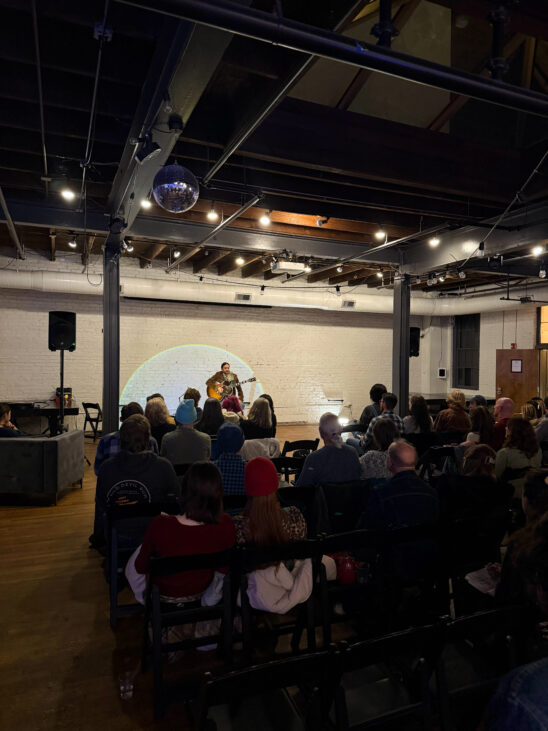
We entered the room. Lamplight, carpets, brick walls, and a wash of sound. And, exactly as promised: an entire room of people sitting, absorbed, silent. No exceptions, even in the back corners — concert hall etiquette for local DIY performance. We moved in an attempt to not ripple the surface of the magic. In moments, I noticed (through revelling in the fact that I could actually hear the singer’s voice anywhere in the room at a free show) the utter range of attendees. The same students you’d see at the Nickelodeon rave sat next to Earl and Augustine from the HOA as well as their grandchildren.
The performances themselves stunned all of us.
From the instagram post commemorating the show:
Artists in order of appearance:
All artists were unburdened of anything aside from their music in and of itself.
I had more ideas — but ultimately, I figured in advance I’d stop speculating and allow the founder to explain it herself. The following is a transcription of our interview in the intermission of the Anyfolk show of November 12th, 2025.
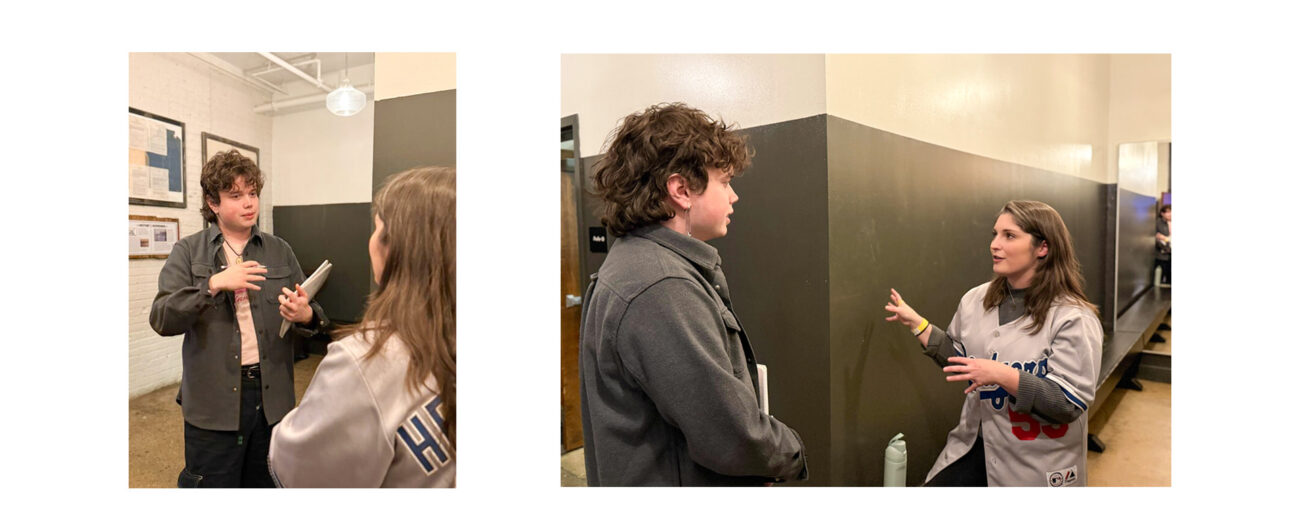
Sean (left) interviewing AnyFolk RVA founder, Tyler Meacham (right)
S – Me (Sean)
T – Tyler Meacham
S: I’m noticing that this is a distinctly communal practice. People are sitting down to absorb this sound, paying attention to it. Do you ever imagine this communal music practice existing on a much larger scale, and what does that look like?
T: Yeah, that would be amazing. It’s what’s missing for a lot of artists at every level, the ability to lock in and listen. It’s rare to go to a music venue of any size and have an experience that’s quiet, so I think (having a space) to be present and immersed in the experience is important.
S: Is there a moment you noticed that, or did it come from a reflection on past experiences?
T: I’m an artist and a performer first. I’ve toured and done this for years now, professionally, and what’s missing for me was a sense of belonging with other people. The reason behind starting AnyFolk originally was just that I saw a need for a space to share art without other aspects of life bogging it down.
S: In these other shows you’re talking about, where it didn’t feel like what you were looking for, what was the issue? Too transactional, too much emotional distance?
T: Transactional is a good word for it. Especially in listening room spaces, there’s a lot of pressure for artists to feel like they have to market themselves, make sure everyone buys the merch, knows where their streaming is, all that. We pass out a program at this show so the artists don’t have to — they can just say, like, “Here’s my song, here’s what it’s about,” so it’s a lot less of this walking advertisement an artist has to be. It’s just being there for the music.
S: I was looking at your Substack, and I saw that you intentionally used the word “gathering” and not something that reads as more celebratory like a festival. Festivals get a lot of attention by default, being these big and innately expressive and celebratory events. How do you think we encourage more of a balance between things like festivals and these regularly occurring gatherings?
T: I think there’s room for all of it. More spaces like this are welcome — your music festivals and your arena tours aren’t gonna be able to be as intimate as this, ever. It’s a great way for artists to grow and build, we’ll see artists coming and surprising the crowd with a new music set. As artists our songs start this way, they start stripped back to nothing, it’s an appreciation for the art form itself (outside of more intense performances). Yeah, I think there’s space for all of it.
S: In the ethos of the show there’s no boundaries on who can perform; they can be from other cities, or just passing by. You’ve had this show for almost a year now — what have been some of the most wild card or unexpected performances?
T: We’ve had artists from New York, North Carolina, other places branching through the East Coast a bit. For me, what’s surprising every time is how you don’t know what they’re gonna do or how they’re gonna sound in the environment, and nine times out of ten they wow you. There’s no real audition process, we just hear the songs as they’re written in some other musical context, like band structure or genre. When they show up in this unique space it’s always awesome.
S: Are there any connections you’ve made at this show that have sustained and led to other things?
T: Yeah, definitely. I’ve played some shows myself with artists that I’ve met here at AnyFolk. I’ve seen artists that have played together here start collaborating with each other—the more of that, honestly, the better. It’s cool to see.
S: Do you feel there’s a kind of spirituality in this space, even if it’s secular or not labeled? There seems to be a spiritual idea in this dedicated concentration on sound. I’m curious about any thoughts you had on that subject.
T: For sure. Songwriting is kind of a spiritual practice for me, and I know a lot of artists find some form of that in their craft. Any time you bring people together, and they’re paying attention to something and not having conversations as they have one experience, it feels special. I don’t know if there’s a higher power to it or anything, but I think you can find a lot of encouragement, community, and safety in this kind of space because people are willing to buy into the same thing you’re buying into. As in, “We’re going to show up, listen to six completely random artists with no idea who they’re gonna be, and hope for the best.” That’s a huge gamble for anyone to just do this on a Wednesday night. I think there’s a little bit of that in there for sure.
S: Wrapping up, part of this event definitely seems like it’s limited scale, and I would imagine it wouldn’t be too worried about growth so much as consistency — but that being said, what does this show look like five, ten years down the line?
T: Right now I’m going week to week (laughs), but I’d love for it to continue being a regular thing that people incorporate into their week or life or whatever it is. There already are people doing that — since we’ve started this year there have been people that have come to at least 20 out of 22 shows, if not every single one of them. That would be a really cool thing, if this was regular enough to not just be a place for artists but a place for a community to grow. Y’know, to just be a part of something real.
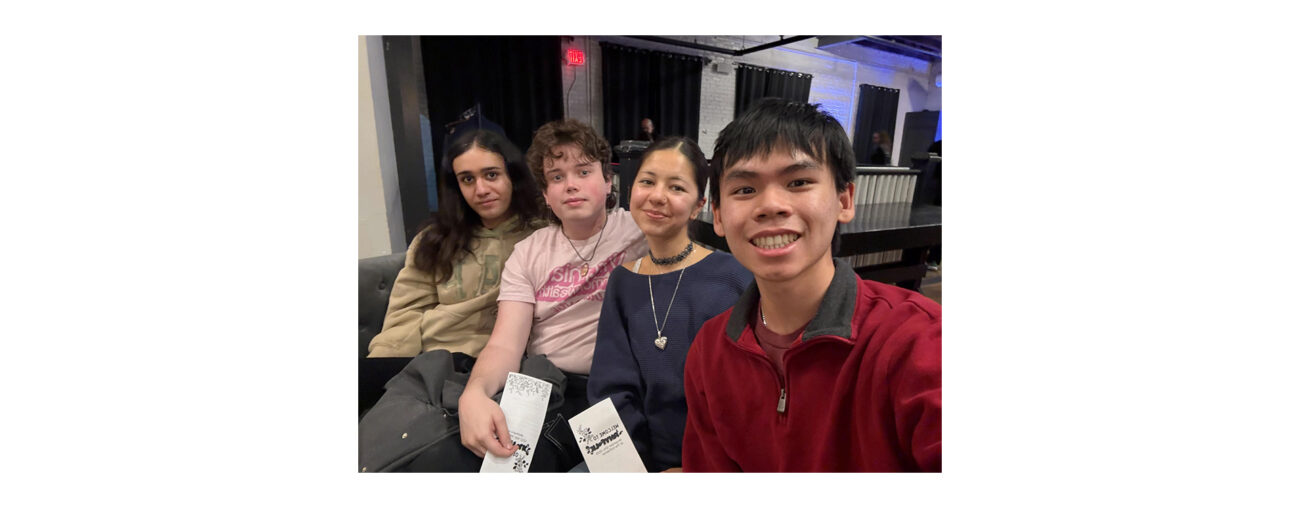
The Ink team at AnyFolk. Pictured from left to right: Aisha, Sean, Ava, and Ben!
Graphics: Aisha Virk
Photography: Ben Phan